

How Addiction Changes the Brain
Addiction is a treatable condition that affects both the brain and behavior. It can change how a person experiences cravings, handles stress, weighs consequences and responds to everyday rewards.
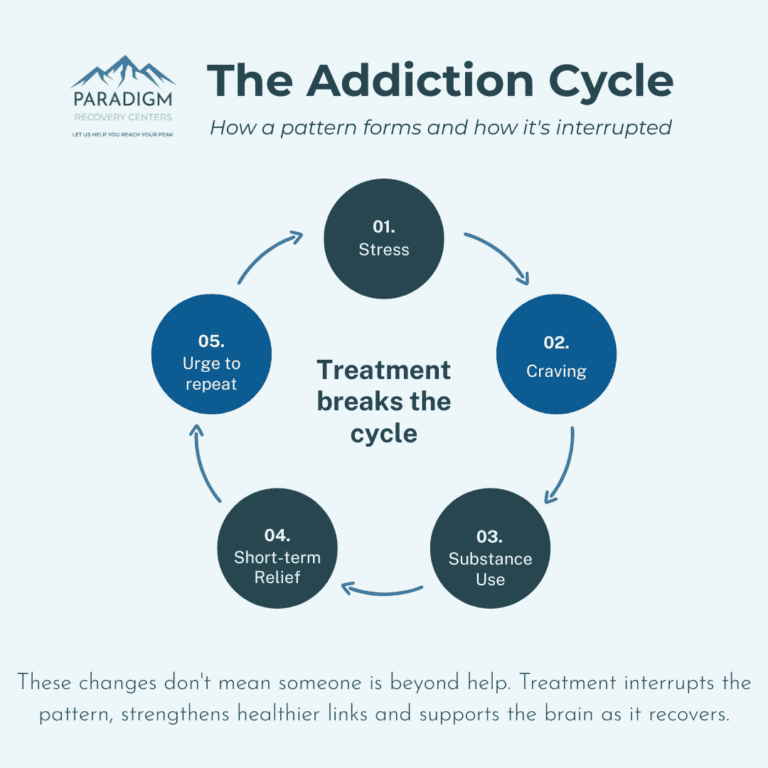
One way to understand this is to think of the brain like a chain. One link connects to the next: stress, craving, substance use, short-term relief and then the urge to repeat the pattern. As that chain gets stronger, it can become harder to pause before reaching for substances again.
These changes may weaken the chain links but they do not mean someone is beyond help. The brain has learned a pattern through repeated substance use. Treatment helps interrupt that pattern, strengthen healthier links and support the brain as it begins to recover.
The Brain’s Reward System and Dopamine
The brain has a reward system that helps people repeat behaviors needed for survival, such as eating, bonding, moving and feeling safe. Dopamine is one chemical messenger involved in that system. It helps the brain notice what feels important and worth repeating.
Everyday rewards usually release dopamine in a steady, balanced way. Some addictive substances can release two to 10 times more dopamine than natural rewards, and they often do it faster. That larger surge teaches the brain to pay close attention.
At first, substance use may feel like pleasure, relief, energy or calm. Over time, the brain can start to treat the substance as more important than other rewards. Food, relationships, hobbies and daily goals may feel less satisfying, while cravings become stronger.
This is one reason addiction can feel so hard to interrupt. The brain is not just chasing pleasure. It has learned a pattern. Treatment helps people step out of that pattern and begin building reward, motivation and stability in healthier ways.
Changes to Decision-Making and Self-Control
Addiction also affects the parts of the brain involved in planning, self-control and weighing consequences. This helps explain why someone may keep using even when they know it is hurting them.
Addiction can change decision-making by making it harder to:
- Pause before acting on an urge
- Think through long-term consequences
- Feel motivated by everyday rewards
- Manage stress
- Resist cravings
- Follow through with healthy routines
- Trust that discomfort will pass
This does not remove personal responsibility, but it does explain why treatment matters. Recovery often requires more than willpower. It requires support, practice, accountability and new tools that help the brain respond differently over time.
Why Addiction Is Considered a Chronic Disease
Addiction is often described as a chronic disease because it can last over time and may involve periods of improvement, relapse, and renewed recovery. Like diabetes, high blood pressure, or asthma addiction often needs ongoing care.
That does not mean recovery is hopeless. It means people benefit from a plan. A person may need treatment, medication, therapy, peer support and return to use prevention skills. The right level of care can help people understand what keeps the cycle going and what support helps interrupt it. Asking for help in the first place is the most important part.

Can the Brain Recover Really From Addiction?
Yes, the brain can recover from addiction. Healing takes time, and the process looks different for each person. The brain learns through repetition. Substance use trains certain pathways, but recovery can train new ones.
This is one reason treatment focuses on routine, coping skills, therapy, accountability and connection. Routine support helps the brain practice new responses to stress, cravings and discomfort.
Factors That Support Brain Recovery
Several factors can support brain recovery during addiction treatment and long-term healing, including:
- Time away from drugs or alcohol
- Safe medical and emotional support
- Consistent sleep and daily structure
- Therapy for trauma, stress or mental health symptoms
- Healthy meals, hydration and movement
- Medication-assisted treatment, when appropriate
- Relapse prevention planning
- Supportive relationships and sober community
- Practice handling triggers without returning to use
Recovery does not happen all at once. Over time, repeated moments of choosing helpful tools can help the brain build a new pattern.

Addiction Treatment Options
Addiction treatment should match the person’s needs, symptoms, environment and level of support. Some people need a highly structured recovery setting. Others may need strong clinical care while slowly returning to work, school or family responsibilities.
Residential Treatment
Residential treatment gives people a safe and structured place to focus on recovery. This level of care can help remove daily triggers while clients participate in therapy, group support, skill-building and relapse prevention.
Residential care may help people who need distance from high-risk environments, more support after detox or time to stabilize before returning to daily life.
Partial Hospitalization Programs (PHP)
A partial hospitalization program, or PHP, offers a high level of treatment during the day without 24-hour residential care. PHP can provide structure, therapy and accountability while allowing more flexibility than a live-in program.
This level of care may help people step down from residential treatment or receive strong support while they continue building stability.
Intensive Outpatient Programs (IOP)
An intensive outpatient program, or IOP, provides addiction treatment several times per week with more flexibility. IOP can help people keep practicing recovery skills while managing work, school, family or daily responsibilities.
IOP often focuses on real-life application. Clients can learn coping tools in treatment, then practice using them in daily life with continued support.
Get Help for Addiction at Paradigm Recovery Centers
Addiction can change the brain, but it does not take away the possibility of recovery. With the right treatment, people can begin to stabilize, rebuild trust with themselves and create new patterns that support long-term healing.
Paradigm Recovery Centers provides practical, compassionate addiction treatment right here in Missouri, including medical detox, residential treatment and outpatient .
If drugs or alcohol have taken enough from you or someone you love, reaching out can help you understand our admissions process and how to move forward at your own pace.
Sources:
- Drugs, Brains, and Behavior: The Science of Addiction – National Institute on Drug Abuse
- Treatment of Substance Use Disorders – CDC